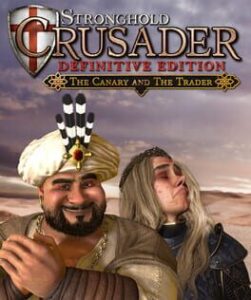
Stronghold Crusader: Definitive Edition – The Canary & The Trader
Stronghold Crusader: Definitive Edition’s first DLC, The Canary & The Trader, expands the base game […]
Real-time strategy (RTS) games are a subgenre of strategy games in which gameplay is not divided into turns, but proceeds smoothly, with all players acting simultaneously. Unlike turn-based games, RTS requires quick decision-making, resource management, and efficient control of multiple units. For this reason, they often include an active pause mechanism that allows some actions to be performed without the passage of time. The term "real-time strategy" was coined by Brett Sperry while promoting Dune II in the 1990s.
Stronghold Crusader: Definitive Edition’s first DLC, The Canary & The Trader, expands the base game […]

Plants vs. Zombies Fusion is a fan-made game based on the original Plants vs. Zombies […]
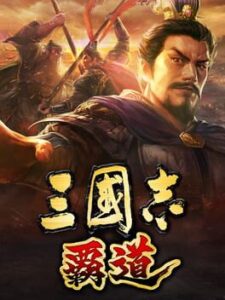
Romance of the Three Kingdoms Hadou is a strategy simulation game in which a cast […]
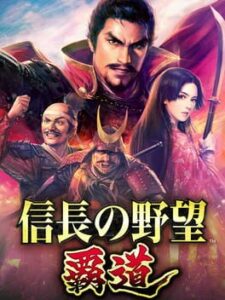
“Nobunaga’s Ambition: Hadou” is the latest in the “Hadou” series. It faithfully portrays the battles […]

Call me Mongol! Some time ago, I ventured into Agrippa’s perilous realm to claim the […]
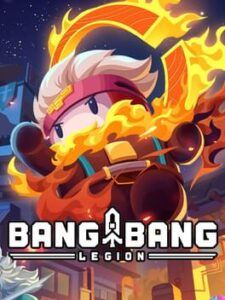
Jump right in! Immerse and unwind in only three minutes, or make a clutch comeback […]
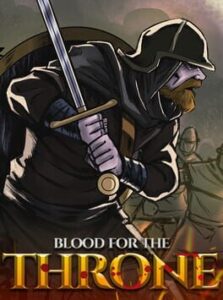
Blood for the Throne is a tactical war strategy game with auto-battler combat and RPG […]
Royal Rampage is a real-time player-versus-player strategy game where players assemble teams of warriors and […]
The Harbinger expansion features the much anticipated 4th playable faction to Sins of a Solar […]
The first playable campaign for Sins of a Solar Empire, relating the histories of each […]
Deploy six new command-class warships and customize your game with factional victory conditions with the […]
Prepare for new challenges with Paths to Power, the first DLC for Sins of a […]
The early predecessors of the genre include, among others, Utopia, Cytron Masters, The Ancient Art of War, and Herzog Zwei. However, it was Dune II by Westwood Studios that set the template for modern RTS games – with resource management, base building, and mouse control.
In the mid-90s, the genre flourished. Warcraft: Orcs & Humans and Command & Conquer expanded mechanics with narrative and multiplayer modes. Total Annihilation introduced full 3D, while Age of Empires combined RTS with history and civilization development. In 1998, StarCraft set the eSports standard, with a scene (especially in South Korea) that continues to this day.
At the turn of the century, RTS games underwent a transformation to full 3D (Homeworld, Warcraft III: Reign of Chaos, Age of Mythology), while some games experimented with hybrids, such as Battlezone (RTS+FPS). Over time, the real-time tactics genre (RTT) emerged, focusing more on combat and less on the economy (Ground Control, Company of Heroes). From Warcraft III maps, the MOBA genre evolved (DotA, later League of Legends), which dominated the online market.
Since 2010, RTS games have been exploring new forms: simplified mobile variants (Clash of Clans), indie productions drawing on nostalgia (Rusted Warfare), and classic series in new installments (Halo Wars 2, Company of Heroes 3). Although the genre no longer holds its former dominance, it remains important, inspiring new forms of strategy games and maintaining a loyal community.